
Before TikTok trends and streaming charts, Nigeria had a generation of powerful women who owned the mic, lit up our screens, and stamped their presence on the music scene.
You see raw, wild and unapologetic music were what these amazing women brought to the table.
They dominated the music scene, and they definitely deserve their flowers.
1. Weird MC — The Lyrical General

Before female rap in Nigeria had a lane, Weird MC was already building the highway.
Born Adesola Adesimbo Idowu in the UK and raised partly in Lagos
When “Ijoya” dropped in 2006, every wedding DJ rejoiced. Weird MC was decades ahead, fusing Yoruba with hip-hop, breaking into a male dominated rap space, and showing us that bars have no gender.
With her bold style and unmistakable voice, she made rap danceable, defiant, and distinctly Nigerian.
In 1996, she dropped her debut album Simply Weird, featuring the now classic track “Allen Avenue.”
It was one of the first Nigerian songs to blend Afrobeat and hip-hop, and it came with a self-produced music video, a first for a Nigerian artist.

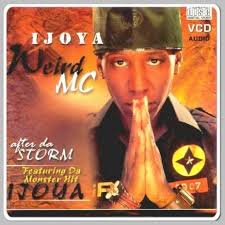
Then in 2006 Weird MC dropped her second album After Da Storm, and with it, the Don Jazzy and JJC-produced banger “Ijoya.”
That song was everywhere, weddings, clubs, radio, TV. It topped MTV Base and earned her a Channel O Music Video Award for Best Special Effects.
Weird MC wasn’t just about the music, she was a fashion rebel, often rocking androgynous looks and prioritizing comfort over glam.
When you see the gigantic Fila, you already know that’s weird MC. She challenged gender norms in an industry that often expected women to act a certain way.

She’s collaborated with legends like Femi Kuti, Lagbaja, 2Baba, Psquare, and even shared stages with Jay-Z, Beyoncé, Missy Elliott, and Busta Rhymes.
Weird MC didn’t just hold it down; she held it up. She carried the weight of being one of the few female voices in a male, dominated industry and turned that pressure into power.
2. Sasha P — The First Lady of Nigerian Hip-Hop

Long before “boss babe” became a hashtag, Sasha P real name Anthonia Yetunde Alabiwas already serving power suits and punchlines. Her iconic track “Adara” wasn’t just music, it was motivation.
In the early 2000s, when Nigerian hip-hop was still finding its voice, Sasha P emerged with a sound that was bold, lyrical, and unapologetically feminine.
Signed to eLDee’s Trybe Records, she quickly earned the title “First Lady of Nigerian Hip-Hop”, not just for her gender, but for her undeniable talent.
Her debut album First Lady (2006) was a statement, featuring hits like “Emi Le Gan” and “Adara”, which became anthems of empowerment. Every youth then had “Adara” in their mouths.

She wasn’t just rapping; she was representing for women, for hip-hop, and for a new generation of Nigerian artists.
First Nigerian female artist to perform at the World Music Awards (2008).
Winner of Best Female Artist at the MTV Africa Music Awards (2010).
Multiple award nominations across Channel O, Sound City, and Women in Entertainment Awards UK.
Sasha P didn’t just open doors she built the hallway.
Her success made it possible for artists like Eva Alordiah, Tems, and Ayra Starr to dream bigger.
She proved that women could dominate the hip-hop game without mimicking the boys, paving the way for a generation of fearless woman.
3. Asa — Soul in Stereo

When Asa, born Bukola Elemide, stepped onto the Nigerian music scene, she didn’t just release songs, she introduced a new sound, a new spirit, and a new standard.
In an industry dominated by high-energy Afrobeats and party anthems, Asa brought something different: depth, soul, and storytelling.
Her debut single, “Eyé Adaba”, was a breath of fresh air soft, spiritual, and poetic. Then came “Jailer” and “Fire on the Mountain”, and suddenly, Nigeria had a new kind of superstar: one who didn’t need to shout to be heard.

She’s also one of the few Nigerian artists who’ve successfully bridged the gap between local and global, performing on international stages and collaborating with artists across continents.
She proved that you don’t have to conform to be successful, you just have to be authentically you.
4. Waje — The Voice That Can Crack Concrete
Before vocal runs became a trend, Waje real name Aituaje Aina Vivian Ebele Iruobe, was already commanding stages with a voice that could shake the heavens and soothe the soul.

Her big break came when she featured on P-Square’s “Do Me” in 2008, a track that became a continental hit and introduced her voice to millions.
She went on release others hits like One Naira” (with M.I), I Wish, So Inspired” (feat. Muna).
Her album: W.A.J.E (2013), Red Velvet (2018), Heart Season (2021), and Waje 2.0 (2022) showcase her evolution from R&B queen to genre-blending icon, with features from Tiwa Savage, Falz, and Masterkraft

She also served as a judge on The Voice Nigeria, mentoring the next generation of vocal talent.
5. Omawumi — Vibes, Volume, and Vernacular

When you think of powerhouse vocals, stage presence, and a voice that can move both mountains and emotions, one name stands tall: Omawumi Megbele.
From her breakout moment on West African Idols to becoming one of Nigeria’s most respected artists, Omawumi has carved a lane that’s equal parts soulful, fierce, and unforgettable.
Her debut single “In the Music” (2008) was a funky, high-energy anthem that announced her arrival.
Then came her debut album Wonder Woman (2009), a genre blending masterpiece that fused Afro-pop, soul, and highlife.

Omawumi didn’t just break into the industry, she reshaped it. Her voice is a national treasure, her presence a masterclass in authenticity.
She’s inspired a generation of artists to sing boldly, speak truthfully, and live unapologetically.
6. Mo’Cheddah — The Gen Z Icon Before Gen Z Was a Thing/ The girl who did it first

Before the rise of TikTok stars and viral Instagram freestyles, there was a young woman who burst onto the Nigerian music scene with swagger, style, and serious talent.
Her name? Mo’Cheddah, real name Oyeyemi Ola, a rapper, singer, fashion designer, and all round creative force who lit up the early 2010s with her bold energy and genre blending sound.
Mo’Cheddah started chasing her creative dreams at just 12 years old, dabbling in acting before finding her true voice in music.
By 15, she had signed with Knighthouse Entertainment, and by 19, she had dropped her debut album, Franchise Celebrity (2010), a project that made her one of the youngest Nigerian artists to achieve mainstream success.

Her breakout single “If You Want Me” was a radio darling, and her follow-up hit “Ko Ma Roll” had everyone dancing.
She wasn’t just a rising star; she was a movement.
She was hailed as the “Naija Hip-Hop Princess”, and for good reason, her blend of rap, R&B, and Afro pop was fresh, fearless, and fun.

She walked so today’s young Gen Z stars COULD RUN



0 Comments